

A new era of people management
From Baku to Berlin, one trend defines the future of work: the balance between humans and technology. The old HR model (administrative, reactive, and policy-driven) no longer works.
Today’s HR leaders must become strategic partners, aligning business goals with human experience.
According to Deloitte’s Global Human Capital Trends 2025, organizations are moving beyond processes toward human outcomes: well-being, inclusion, and sustainable productivity.
Meanwhile, McKinsey’s HR Monitor 2025 finds that only 12% of companies plan their workforce more than three years ahead – a gap that threatens long-term competitiveness.
“HR can no longer afford to be reactive. The future belongs to those who see people as catalysts, not costs.”
— Deloitte Human Capital Report, 2025
The global shift: skills, AI, and experience
1) Skills over jobs
Hiring based on skills rather than degrees is reshaping how companies build teams.
IBM, Unilever, and Accenture are already mapping “skill ecosystems” identifying which capabilities drive innovation and which are becoming obsolete. This model helps HR leaders anticipate future needs, not just fill present vacancies.
2) The rise of AI-driven HR
Modern HR platforms no longer report the past – they predict the future. Analytics can now forecast attrition, monitor engagement, and even detect early signs of burnout. Yet, experts warn: automation should augment human insight, not replace it.
3) Human experience as a strategy
Despite rapid digitalization, empathy is the new metric of success. A Cisco Systems study shows that emotional intelligence and adaptability have overtaken technical expertise in leadership value. This means HR’s role now includes culture architecture designing how people feel, think, and connect inside organizations.
Lessons from global leaders
-
Moderna merged its tech and HR teams to create a unified “People & Digital” function – integrating analytics and empathy under one leadership. (The Wall Street Journal)
-
Microsoft and Salesforce introduced AI ethics councils to ensure transparency in HR analytics.
-
Google has tied leadership bonuses to employee experience scores – proof that EX (Employee Experience) is now a business KPI.
What it means for Azerbaijani companies?
 For organizations in Azerbaijan, these trends bring both opportunity and urgency:
-
Re-skill before you recruit. Map existing skills, identify future needs, and train internally.
-
Digitalize responsibly. Invest in HR analytics tools, but ensure data ethics and transparency.
-
Shift HR’s role. Move from administration to strategy where HR drives innovation, leadership, and culture.
-
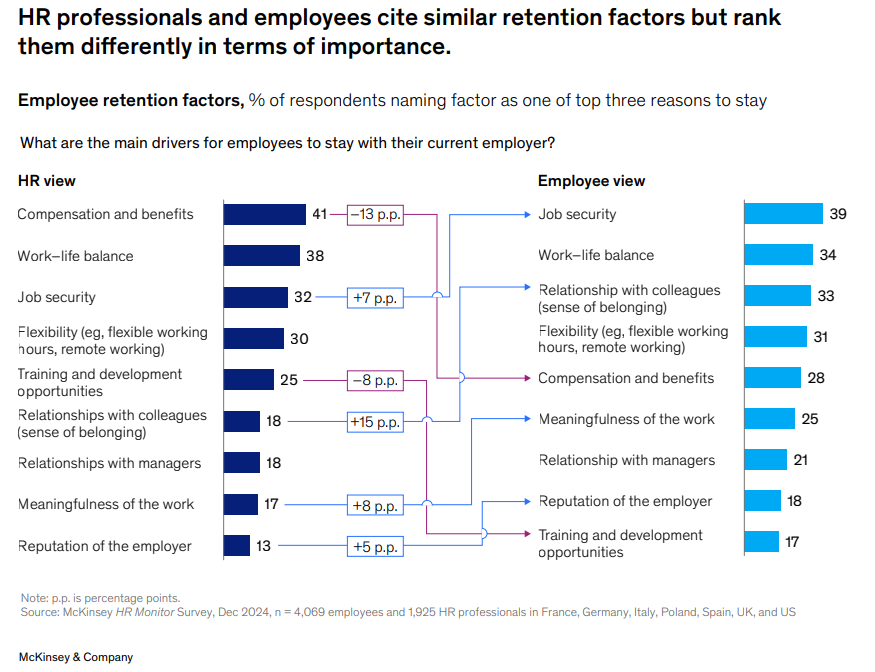
Build trust and culture. Hybrid work, flexible hours, and purpose-driven leadership are key to retention.
“Technology gives speed. Culture gives direction. HR connects the two.”
– Harvard Business Review, 2024